Main Menu
Duration
May. 05 - Jun. 02, 2026
Duration

Enroll before

One-time Payment

Live sessions

Max. seats
Seats left
How are artificial intelligence and automated digital systems affecting contemporary art and curatorial practices? What ethical and critical questions arise from new human-machine relations?
This course will teach participants about the various applications of artificial intelligence and semi-automated digital systems to contemporary art and culture. By drawing on case studies and historical references, participants will gain a comprehensive understanding of how automated digital technologies are defining the future of contemporary art, in terms of aesthetics, ethics, languages and markets.
First, the course begins with an overview of the role of semi-automated intelligent softwares in contemporary art and visual culture from the 1990’s to today.
Second, we will learn about GAN database machine learning processes and AI prompt systems (including Open AI, Midjourney, Stable Diffusion, Imagen) and how these recent technologies have been applied in media art and the digital art market.
Last but not least, the course reflects on questions and new possibilities that arise from the development of artificial intelligence, including:
This course is aimed at art creatives (artists, photographers, visual designers) and professionals (curator, critics, gallerists, collectors) with a keen interest in fringe technologies and scientific research related to the application of artificial and automated digital methods to contemporary art.
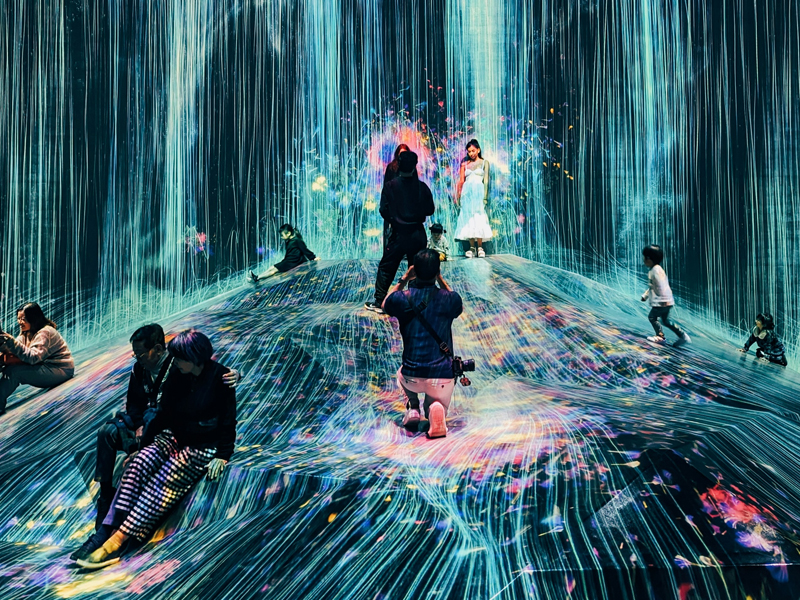
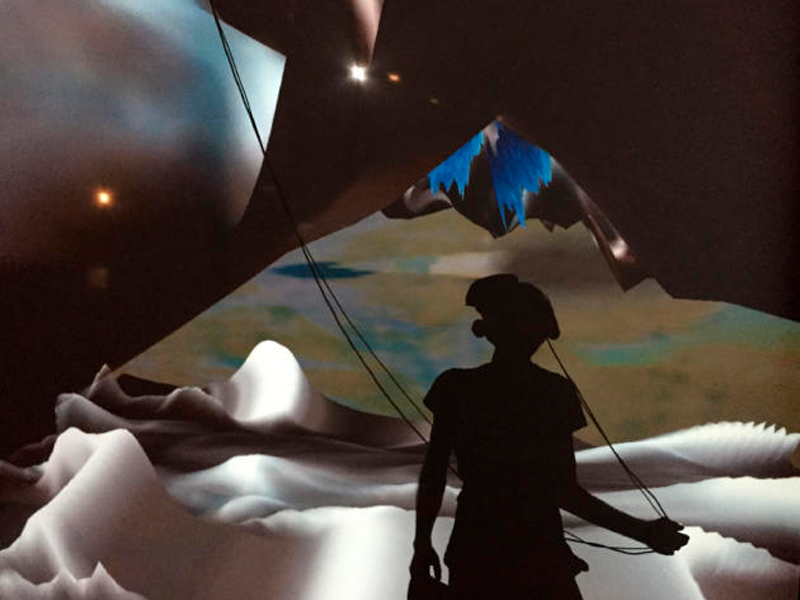
Image by Marko Brečić

Session 1. Introduction to the program and course overview
Introduction to the program and course overview. This is a one-hour-only welcome session. The lecturer will introduce the program and participants will introduce themselves. No prior preparation is necessary.
Session 2. History and evolution of AI
2.1. The origins of Artificial Intelligence
2.2. Which intelligence?
2.3. Different fields of applications
2.4. Training datasets
2.5. AI and contemporary visual culture
Session 3. AI between Media Art and Digital Art
3.1. Re-thinking artworks in the media lab scenario
3.2. Exhibitions, events, meetings and conferences
3.3. Internet, datasets and network systems
3.4. Environments and installations
3.5. Robotics, cyborgs and expanded bodies
Session 4. Artificial Intelligence and Visual Arts
4.1. Generative art: hybrid aesthetics at the dawn of AI
4.2. Deep Learning and Generative Models
4.3. Self-Attention mechanisms
4.4. Operational images
4.5. Curatorship, authorship and markets
Session 5. New issues, ethics and aesthetics
5.1. Speculations of a possible future
5.2. An «intelligent» society
5.3. The biases of computer vision
5.4. Fluid bodies and identities
5.5. Ontology: among humans, machines and environment
Language
Classes are held in English.
Format & Modality
The course is fully online and taught live via Zoom in small, interactive groups to support active learning. Live captioning is available during the sessions.
Schedule
Live sessions take place every Tuesday from 7-9PM (Berlin time, CEST).
Attendance
Live attendance is encouraged to get the most out of the course, but recordings are available if you cannot attend a session.
Course Materials
All course materials—including recordings, readings, and presentations—are available on the Node platform for as long as you wish.
Assignments
Optional assignments are included, with personal feedback from the lecturers to help you apply what you learn. Please note that feedback is provided only during the course dates.
Certificate
A downloadable certificate is available upon course completion.
Technical Requirements
A stable internet connection, a computer with a camera and microphone, and access to Zoom are required.
Questions?
Check our FAQ or contact us via our online form.
Marco Mancuso
"The course and instructor was excellent, 100%. The course gave a brilliant overview of the subject, alongside useful historical case studies and also room for group reflection. I would do another course with this tutor."
"I really enjoyed the AI and Arts course. Professor Marco Mancuso was clear, knowledgeable, and taught the material in a very engaging and accessible way. I highly recommend it."