Main Menu
Duration
Nov. 12 - Dec. 17, 2026
Duration

Enroll before

One-time Payment

Live sessions

Max. seats
While exhibitions remain one of the most common formats to present art, curators increasingly work through a wider range of public activities such as experimental workshops, performances, and participatory events. In this course, we will experiment with formats that extend the possibilities of curatorial practice.
Taking a practical focus, you will be equipped with the tools to conceptualize and produce a curatorial project from start to finish. Through case studies, short lectures and in-class brainstorming sessions, we will rethink curating as a form of cultural mediation that operates beyond objects, spaces, and conventional exhibition structures. We will also learn from challenges, like where collaborations can go wrong and how to deal with unexpected production issues.
By the end, you will be able to develop proposals for non-traditional curatorial projects including interactive programs, and co-creative productions.
Over five weeks, you will learn how to:
● Conceptualize a variety of curatorial formats (screenings, talks, concerts, performances, workshops)
● Align your project’s aim with its creative outcome
● Work with collaborators and community partners
● Manage the logistics of curatorial events and public programs
● Communicate the curatorial project to various stakeholders (funders, audiences, partners)
● Evaluate the success of your project
This course is for emerging arts professionals who work across formats and sites or who are interested in learning how to curate event-based projects. No prior experience is necessary, but an appreciation for non-traditional arts experiences is a plus.
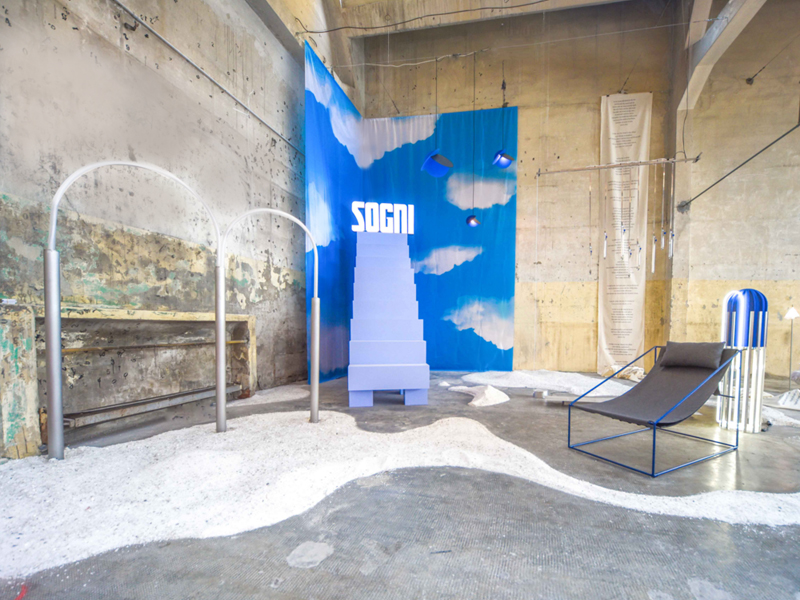
Image credits: ArtistAmyKarle1, CC BY-SA 4.0

Session 1: Introduction | 12 November 2026
This first one-hour session introduces the program and provides a course overview. Participants will meet each other and share their motivations for taking the course.
Session 2: Conceptual Building Blocks | 19 November 2026
In this session, we will explore event-based curatorial formats such as workshops, performances, and creative collaborations, with the aim of inspiring you to develop your own concepts and ideas. We will then consider what makes a memorable curatorial project and how to align a project’s aims with its potential outcomes.
Topics covered:
● Defining the goals of a curatorial project
● Innovative curatorial formats: case studies
● Building the format to serve the purpose
Session 3: Collaborations and Partnerships | 3 December 2026
Creative formats depend on working effectively with others. This session focuses on how to establish collaborations and partnerships. Learning from a range of both successful and challenging case studies, we will draft a set of collaboration guidelines that you can use for future projects..
Topics covered:
● How to identify collaborators and community partners
● How to establish collaborator and partnership guidelines
Session 4: The Elements of Production | 10 December 2026
In this session, we will discuss how to organize production for event-based curatorial projects, working from public opening backward. We will also discover how to manage unexpected production issues, learning from real world case studies.
Topics covered:
● Organization from Z-A (timelines, stakeholders, logistics, equipment, budget, etc.)
● Managing unexpected issues
Session 5: Communicating and Evaluating a Project | 17 December 2026
Non-traditional formats need to be communicated clearly so that audiences are inspired to attend and engage. This session provides tools to write for a variety of readers and formats.
In the second part of the session, we will consider strategies for measuring a project’s success when traditional exhibition evaluation methods like tracking visitor numbers don’t work.
Topics covered:
● Communicating a project to garner interest and participation
● Tailoring mediation to specific audiences
● Tools for evaluating a project’s success that are suitable for different types of formats.
Language
Classes are held in English.
Format & Modality
The course is fully online and taught live via Zoom in small, interactive groups to support active learning. Live captioning is available during the sessions.
Schedule
Live sessions take place Thursdays, November 12, 19, and December 3, 10 and 17, from 3pm to 5pm Berlin time CET.
Attendance
Live attendance is encouraged to get the most out of the course, but recordings are available if you cannot attend a session.
Course Materials
All course materials—including recordings, readings, and presentations—are available on the Node platform for as long as you wish.
Assignments
Optional assignments are included, with personal feedback from the lecturers to help you apply what you learn. Please note that feedback is provided only during the course dates.
Certificate
A downloadable certificate is available upon course completion.
Technical Requirements
A stable internet connection, a computer with a camera and microphone, and access to Zoom are required.
Questions?
Check our FAQ or contact us via our online form.
Jess Van Nostrand
"Curating Beyond Exhibitions with Jess Van Nostrand has brought together a cohort of diverse backgrounds and experiences. This, along with Nostrand's array of experiences in creative event-building, has fostered out-of-the-box thinking in program development. "